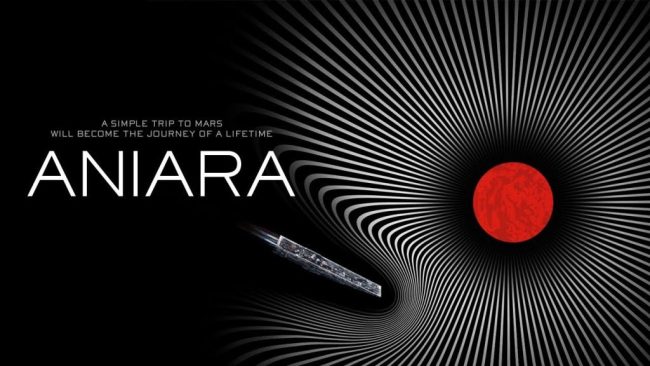
“Myself I questioned, but gave no reply.
I dreamt myself a life, then lived a lie.
I ranged the universe but passed it by —
for captive on Aniara here was I.”
Aniara, section 18
Harry Martinson’s epic poem Aniara, originally written in Swedish in 1956, depicts the destination-less journey of space travellers whose ship was knocked off course. With only the sanctity of the Mima, an artificial intelligence able to remind its viewers of life on Earth, the inhabitants of the Aniara drift further into devastation as even that last comfort is taken from them.
I read Aniara through this link, which offered an English translation of the poem by Stephen Klass and Leif Sjöberg, as well as a detailed analysis of its history, themes, storyline, and turns of phrase. The language used is most impressive, preserving Martinson’s rhythm and wordplay without sacrificing its art.
It was only upon finishing the 2018 Swedish film adaptation of Aniara that I realized its origins, and I was fascinated to pursue them. For a shockingly lurid and bleak sci-fi movie, learning it was based upon a decades-old poem intrigued me. And I was pleasantly surprised by the sapphic nature of the film, as well! Though all those sex scenes – one reminding me distinctly of Midsommar – made me hesitate in broadly recommending it to others. The Mima itself was more of a consistent presence in the poem rather than the movie, although its suicide over the ever-present weight of human agony held the same weight and hopelessness. Unlike the movie, the Aniara poem offers many different stories from an array of voices, both of their life before and their life on this “sarcophagus.”
From the page to the screen, several of Aniara’s characters are gender-swapped: the Mimarobe, in the original text, is male, and the dancer Daisy Doody is female. The inverse holds true in the movie, although Isagel remains female – but the nature of her pregnancy and death are portrayed in more solid, direct methods, leading to greater devastation.
I was unable to stop watching Aniara, but at Isagel’s speech to the Mimarobe about how much she appreciated and loved her, I had to pause the film and step away, hoping against hope that they’d make it to a happy ending… but I must’ve known. I stepped back in right at the darkest part of the movie – even before Aniara drifted into deep space.
The final shot of Lyra was breathtaking, a sight that grants hope only to the audience, not the characters. No safe haven exists for those who will never see it, being as it was so far out of reach. The ecological destruction humanity wrought upon the Earth became their reason for escaping it, and a planet untouched by human life will remain unmarred. An atmospheric, graphic, and heartbreaking watch, Aniara, in both of its forms, is an exploration of human survival and, consequently, what happens when the line is crossed between survival and life.